Westfield Locksmiths Service Team
Local locksmith team
May 28, 2026 9 min read

Running a storefront or office along East Broad Street or tucked into one of Westfield's busy side-street commercial corridors means you're responsible for more than just your merchandise and your staff — you're responsible for controlling who can open your doors at any hour. Yet physical security is one of those things most business owners patch together over time: a key copied here, a lock changed there, an old employee's access never quite revoked. That patchwork approach is exactly how break-ins, internal theft, and liability gaps happen.
This checklist is built for Westfield business owners who want a clear, practical framework — not vague advice. We'll walk through master keying strategy, the right exit hardware for NJ commercial spaces, and the steps you should take every single time an employee leaves. Whether you operate a boutique, a medical office, or a multi-suite building, these steps will tighten your security posture starting today.
## Start With a Mortise Lock Audit — Your Foundation for Commercial Security
The mortise lock is the workhorse of serious commercial security. Unlike a standard door knob lock that sits on the surface of the door, a mortise lock is recessed into a pocket cut into the door's edge, giving it far greater resistance to kick-in attacks and pry-bar leverage. If your Westfield storefront still relies on cylindrical knob locks or basic deadbolts for its primary entry points, a commercial locksmith assessment should be your very first step. A qualified technician can evaluate each door — frame condition, strike plate depth, door thickness, hinge exposure — and tell you exactly which openings need a mortise lock upgrade and which existing hardware is still performing adequately.
During that audit, also look at your back doors, receiving entrances, and any interior suite doors that separate your retail floor from your back office or server room. These secondary points are often overlooked and are frequently the target in commercial burglaries. Westfield's downtown commercial district has a mix of older building stock with shallow door frames that were never designed for high-security hardware — a trained locksmith can specify the right mortise lock profile for those non-standard frames rather than forcing a modern lock into an incompatible opening.
## Master Keying: The Commercial Locksmith Strategy That Saves Time and Reduces Risk
A master key system lets you create a hierarchy of access: a grand master key that opens everything, department-level master keys that open a subset of locks, and individual keys that open only assigned doors. For a multi-employee Westfield business, this eliminates the nightmare of carrying a jangling ring of 15 keys while still giving your manager building-wide access and giving your part-time stock associate access only to the back room they actually need. Every door in the system still uses its own mortise lock or high-security cylinder — the magic is in the precision-cut key bywarding, not in weakening the locks themselves.
The critical rule with any master key system: document everything. Keep a key log that records which key number was issued to which employee, on what date, and whether it was returned. When you hand out a key without logging it, you lose the ability to know your exposure when that employee eventually leaves. A commercial locksmith can set you up with a restricted keyway system — meaning keys can only be duplicated by your locksmith with your authorization, not copied at a hardware store kiosk. That single feature closes one of the most common security gaps small businesses face.
## Exit Hardware, ADA Compliance, and the Door Knob Lock Mistake Most Offices Make
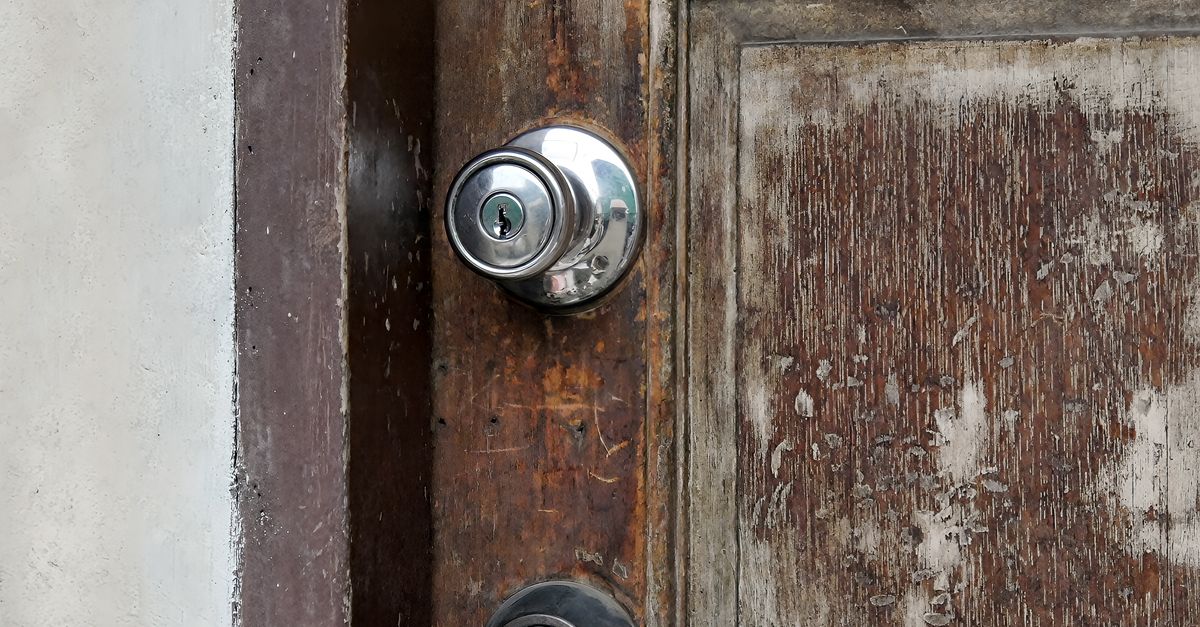
New Jersey's commercial building code and ADA requirements govern what hardware is legally required on egress doors, and the rules are stricter than many business owners realize. Panic bars (also called exit devices or push bars) are required on doors serving assembly occupancies above a certain occupant load, and lever-style handles are required where a door knob lock would otherwise force a person to grip and twist — a motion that ADA standards prohibit on accessible routes. If your office has a door knob lock on a path that leads to a restroom, break room, or primary exit, you may already be out of compliance.
Beyond compliance, exit hardware is a security concern in its own right. Cheap push bars can be defeated from the outside if they're not paired with the right exterior trim and locking cylinder. A properly specified mortise lock exit device — where the latch and deadbolt functions are built into one mortise body — gives you the egress freedom required by code and the after-hours security you need when the building is empty. Ask a qualified commercial locksmith to walk each exit door with you and confirm that the hardware meets both current code and your actual security needs. If you're unsure where to start, call (908) 529-8021 and our team can schedule a site walk at a time that works around your business hours.
## Employee Turnover Protocol: What to Do Every Time Someone Leaves
Employee turnover is the single most predictable security event a business will face, and it's the one most often handled inconsistently. Here is a concrete protocol to follow every time an employee departs — whether the departure is friendly or not. First, recover all physical keys at the time of the final meeting and check them against your key log. Second, if any key is not returned or if the employee had access to a master key, schedule a rekey or cylinder change immediately — not next week, not after busy season. Third, update any keypad or access control codes that employee knew, and remove their credentials from any electronic access system. Fourth, change the alarm code if they had it. Fifth, if the employee had after-hours access, verify with your alarm provider that their user profile is fully deleted.
For businesses with high turnover — restaurants, retail, seasonal operations — a rekey schedule built around staffing cycles makes more practical sense than rekeying after every single departure. A commercial locksmith can help you set a rhythm: for example, a full cylinder rekey at the end of each busy season, combined with a restricted keyway that slows down unauthorized duplication in between. The cost of a scheduled rekey is a straightforward conversation based on the number of cylinders, the hardware type, and any parts needed — your locksmith should give you an exact price before any work begins, with no surprises at the end of the job.
## Emergency Locksmith Readiness: What Westfield Businesses Should Have in Place Before a Crisis Hits
What is a locksmith call out fee? It is a charge that covers the technician's travel and dispatch, separate from the labor and parts for the actual work. When you call for emergency locksmith service at 2 a.m. because a closing manager locked the deposit bag inside the office, the total you'll pay depends on factors including the time of day, travel distance from our nearest technician, the type of lock involved, and whether any parts need to be sourced. The right locksmith will tell you the exact amount before a single tool comes out of the bag — that transparency is non-negotiable. Save (908) 529-8021 in your phone now, before you need it at an inconvenient hour.
Westfield's crime rate context is worth understanding: the town generally ranks as one of Union County's safer communities, and the commercial areas around the downtown train station and South Avenue see consistent foot traffic that provides natural deterrence. But low overall crime does not mean zero commercial burglaries, and businesses near the edges of the downtown corridor — particularly those with less foot traffic after 8 p.m. — face a different risk profile than a boutique in the heart of the shopping district. A well-maintained mortise lock, a documented master key system, and a reliable emergency locksmith on speed dial are the three practical layers that cover the vast majority of scenarios Westfield business owners actually encounter. Our team is available around the clock, 365 days a year, and we serve the full Westfield area with fast response times — because a business lockout or a broken lock on a closing night doesn't wait for business hours.
Frequently asked questions
How much does a locksmith cost in NJ for commercial work?+
The final price for commercial locksmith work in NJ depends on several factors: the number and type of locks involved (a mortise lock rekey costs differently than a simple cylindrical lock rekey), the time of day, travel distance to your location, and whether any replacement parts or new hardware are needed. There is no single flat number that applies to every job. What you should always expect from a reputable locksmith is a clear, confirmed price before any work starts — no vague estimates that balloon after the fact. When you call (908) 529-8021, we walk through the job with you and give you an exact quote upfront.
What is a locksmith call out fee, and will I be charged one for emergency service?+
A call out fee is the charge a locksmith applies to cover dispatch and travel to your location, and it is separate from the labor and parts for the actual service. Not every locksmith structures pricing the same way — some bundle travel into a single service rate, others itemize it. What matters is that you know the total before you agree to anything. When you reach us at (908) 529-8021, we'll confirm all charges — including any after-hours or emergency component — before our technician arrives, so there are no surprises on the invoice.
What is the crime rate in Westfield, NJ, and does my business really need upgraded locks?+
Westfield consistently ranks among the safer communities in Union County, with relatively low rates of violent crime. However, commercial burglary and opportunistic theft do occur, particularly in businesses with outdated hardware, poor key control, or high employee turnover. A mortise lock on your primary entry, a documented master key system, and a clear offboarding protocol for departing employees address the most common real-world vulnerabilities — regardless of what the overall crime statistics say. Security is about reducing your specific exposure, not just comparing yourself to a county average.
How do I find reputable locksmiths in New Jersey for my business?+
Look for a locksmith who can demonstrate real commercial experience — specifically with mortise lock installation, master key system design, and exit hardware compliance — rather than one who only handles residential or automotive calls. Ask whether they give a confirmed upfront price before starting work, whether they are insured, and whether they use restricted keyways that prevent unauthorized key duplication. Local presence matters too: a technician who knows Westfield's building stock and commercial corridors will give you more accurate hardware recommendations than a distant dispatch service. Our team is local, experienced, and available 24/7 at (908) 529-8021.